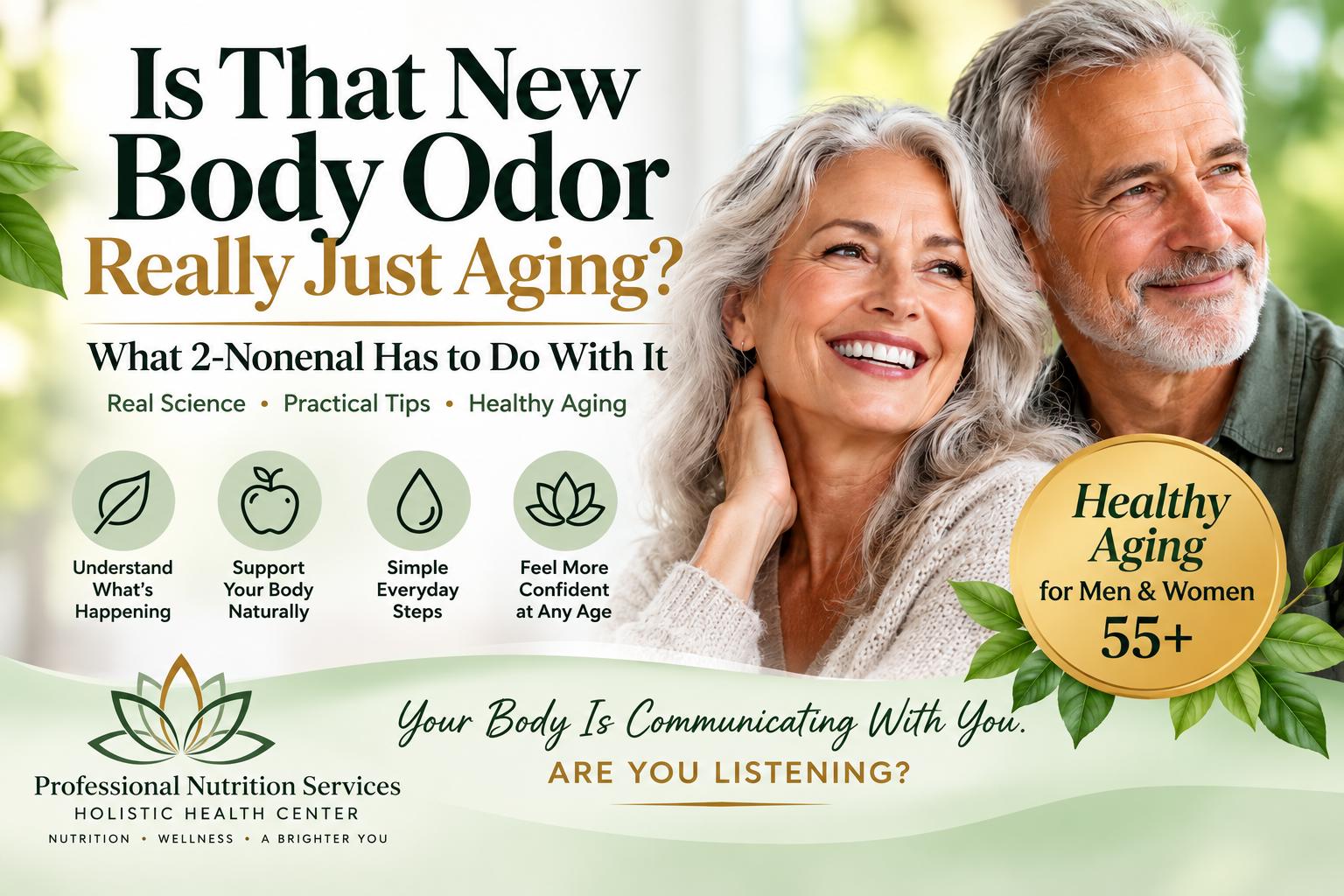
Is That New Body Odor Really Just Aging?
What 2-Nonenal Has to Do With It
Have you noticed that your natural body scent seems different than it used to be?
Maybe you've noticed it in yourself—or perhaps you've noticed a different scent in a spouse, partner, parent, or friend.
It can be an uncomfortable subject to talk about, but there's actually some interesting science behind it.
One compound researchers have connected with changes in body odor as we age is 2-nonenal.
And no, it isn't simply a matter of “not washing enough.”
What Is 2-Nonenal?
2-Nonenal is a compound that can be produced when certain fatty acids found in the oils on our skin undergo oxidation.
Research has found that 2-nonenal is more commonly detected in older adults and appears to increase as we age. Changes in the composition of skin oils and increased lipid oxidation are thought to play an important role.
In one study comparing adults from their 20s through their 70s, researchers identified 2-nonenal primarily in the older participants.
So if you've noticed a change in your body scent after 55, there may actually be a biological reason for it.
Why Does Body Odor Change After 55?
As we get older, our skin changes.
The amount and composition of the oils produced by our skin can change. Our skin may also become drier, and our body's overall metabolism and hormonal environment change over time.
These changes can affect the compounds produced on the surface of the skin.
One of those compounds is 2-nonenal.
It has been described as having a grassy, oily, fatty, or slightly musty odor.
And here's something important:
This can happen to both men and women.
It isn't a “women's problem” or a “men's problem.”
It's one of the many changes that can occur as part of the aging process.
Does 2-Nonenal Mean Something Is Wrong?
Not necessarily.
The presence of 2-nonenal is associated with normal age-related changes and is not, by itself, a sign of disease.
However, if your body odor changes suddenly or becomes dramatically different, don't automatically blame aging.
Changes in medications, diet, hygiene, sweating, skin conditions, infections, and certain medical conditions can also affect body odor.
A sudden or unexplained change is worth discussing with your healthcare professional.
So Can You Do Anything About It?
This is where things get interesting.
There is no magic pill or proven “2-nonenal detox.”
But there are things you can do to support your overall skin health and healthy aging.
1. Take care of your skin
Regular gentle cleansing and moisturizing become increasingly important as we age.
Pay attention to areas where sweat and skin oils can accumulate, including the neck, chest, back, and underarms.
2. Eat a nutrient-rich diet
Your body needs nutrients to maintain healthy skin and support its natural antioxidant systems.
Include plenty of:
- Colorful vegetables
- Berries and other fruits
- Leafy greens
- Nuts and seeds
- Herbs and spices
- Quality protein
- Healthy fats
The goal isn't to “detox” 2-nonenal.
The goal is to give your body the nutritional building blocks it needs to age well.
3. Stay hydrated
Hydration is important for overall health and skin function.
Water won't simply “wash out” 2-nonenal, but staying adequately hydrated is still an important part of caring for your body as you age.
4. Look at your overall lifestyle
Healthy aging isn't about one supplement or one food.
It's about the combination of:
Good nutrition
Adequate hydration
Movement
Quality sleep
Stress management
Healthy skin care
And appropriate nutritional support
These basics can have a much greater impact on your overall wellness than chasing the latest “anti-aging” product.
What About Supplements?
This is where I believe an individualized approach makes more sense than taking whatever happens to be trending online.
As we get older, nutritional needs can change.
Medications, digestive issues, dietary patterns, and lifestyle can all influence our nutritional status.
Rather than taking a dozen supplements because someone says they will “eliminate old-age odor,” it's smarter to understand what your individual body actually needs.
Don't Let an Embarrassing Subject Keep You From Asking Questions
Body odor can be an uncomfortable subject.
But aging shouldn't mean that we stop paying attention to changes in our bodies.
Sometimes a small change is simply part of getting older.
Other times, it's an opportunity to take a closer look at nutrition, medications, lifestyle, skin health, or other factors.
Your body is constantly communicating with you.
The question is:
Are you listening?
At Professional Nutrition Services / Holistic Health Center, I believe healthy aging starts with understanding the whole person—not just treating one symptom at a time.
If you're over 55 and noticing changes in your energy, digestion, weight, hormones, skin, or overall wellness, let's take a closer look at what may be contributing to those changes.
You don't have to accept every change as “just getting older.”
Sometimes, understanding what is happening is the first step toward feeling better.
Educational information only. This article is not intended to diagnose, treat, or cure any medical condition.