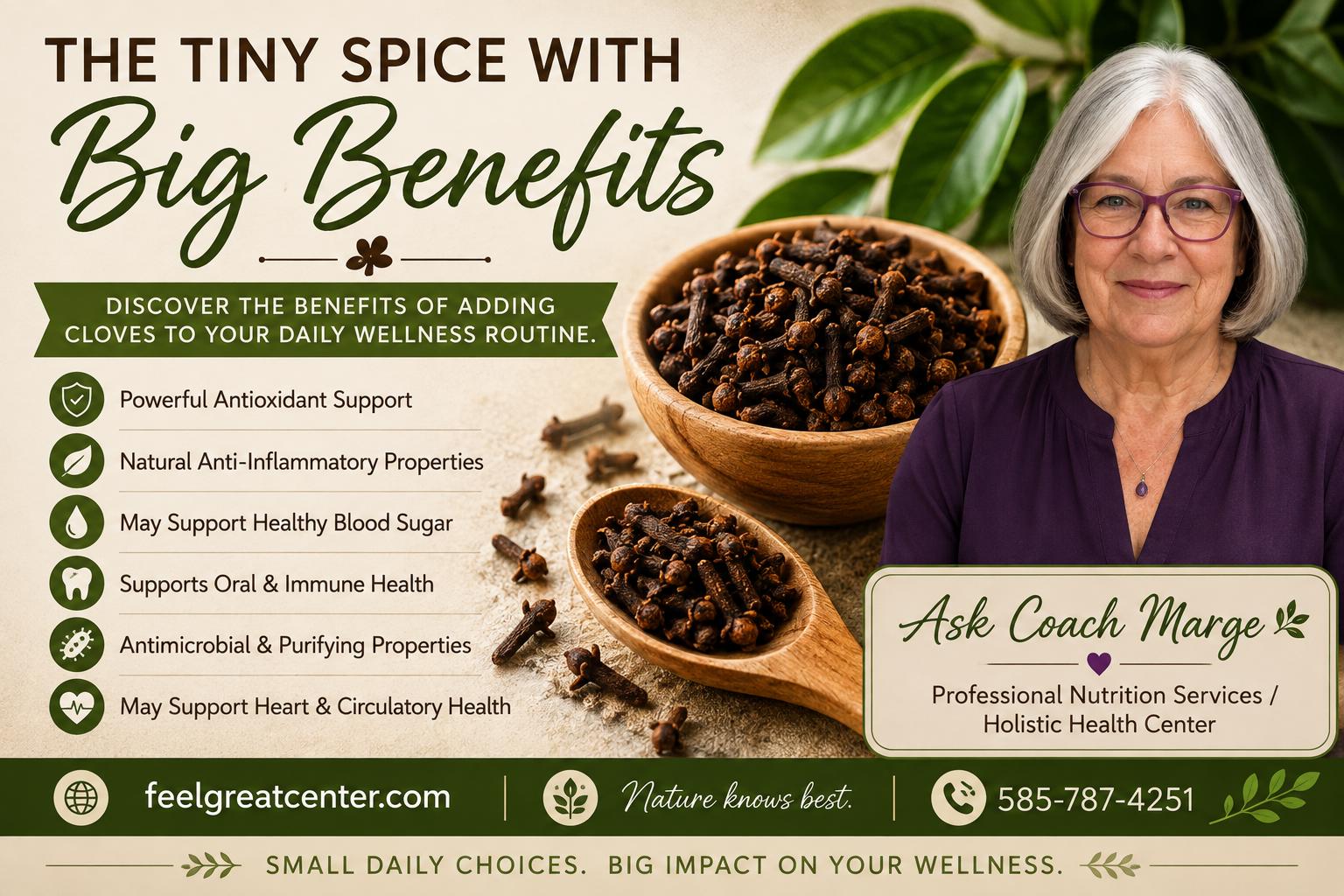
Cloves: The Tiny Spice With Big Health Potential
Could adding a little clove to your daily routine be a simple way to give your body some extra nutritional support?
Cloves may be one of the most overlooked spices in your kitchen.
Those small, aromatic flower buds contain eugenol, a naturally occurring plant compound that has been studied for its antioxidant, anti-inflammatory and antimicrobial properties. Research suggests that cloves may have several interesting health benefits—but as with any natural approach, it's important to understand what the research actually shows.
Let's take a closer look at why I think cloves deserve a place in your daily wellness routine.
1. Cloves Are Packed With Antioxidant Compounds
Our bodies are constantly exposed to oxidative stress from normal metabolism, environmental exposures, stress, poor sleep and other factors.
Cloves contain eugenol and other polyphenolic compounds with antioxidant activity. Antioxidants help the body manage oxidative stress and protect cells from damage.
This is one reason I like looking at food as part of a daily wellness strategy rather than waiting until something goes wrong.
2. Cloves Have Natural Anti-Inflammatory Potential
Inflammation is a normal part of the body's defense system. The problem is when inflammatory processes become excessive or persistent.
Eugenol has demonstrated anti-inflammatory activity in laboratory and experimental research. More recent research continues to investigate how eugenol may influence inflammatory pathways.
That doesn't mean eating cloves will "cure inflammation."
It does mean this little spice contains biologically active compounds that are worth paying attention to.
3. Cloves May Support Healthy Blood Sugar Metabolism
This is one of the more interesting areas of clove research.
A small 2019 pilot study involving 13 healthy and prediabetic volunteers found that a polyphenol-rich clove extracttaken for 30 days was associated with reductions in fasting and after-meal blood glucose levels.
However, this was a very small pilot study, and the researchers themselves noted that larger clinical trials are needed.
So I would not recommend thinking of cloves as a treatment for diabetes.
Instead, think of them as one potentially helpful addition to an overall lifestyle that includes nutritious food, movement, sleep and appropriate medical care.
4. Cloves May Support Oral Health
Clove's eugenol has a long history of use in dentistry because of its local soothing and antimicrobial properties.
That's one reason clove-derived compounds have been used in dental products and preparations.
But there is an important distinction:
Using a little clove as a food is very different from putting concentrated clove oil directly into your mouth.
More is not necessarily better.
5. Cloves May Have Antimicrobial Properties
Research has found that eugenol and clove extracts can demonstrate antibacterial and antifungal activity in laboratory settings.
This is fascinating—but laboratory findings don't automatically mean that eating cloves will treat an infection.
Still, it gives us another reason to appreciate the natural compounds found in this traditional spice.
6. Cloves May Influence Platelet Activity
Here's an area where I want you to be particularly careful.
Research has shown that eugenol can affect platelet aggregation—the process involved in blood clotting.
This is potentially interesting from a cardiovascular research perspective, but it also means more isn't necessarily better.
If you take blood-thinning or antiplatelet medication, or you have a bleeding disorder or upcoming surgery, talk with your healthcare professional before using concentrated clove products or supplements.
So How Can You Use Cloves?
You don't need a complicated routine.
Try using a small amount of ground clove as a culinary spice.
You can add it to:
- Oatmeal
- Smoothies
- Chia pudding
- Applesauce
- Baked apples
- Tea
- Coffee
- Soups
- Stews
- Roasted vegetables
You can also combine cloves with other warming spices such as cinnamon, ginger and nutmeg.
A Simple Daily Idea
Try adding a small pinch of ground cloves to your morning oatmeal, smoothie or warm beverage.
The goal isn't to consume huge amounts.
The goal is to make small, consistent choices that add beneficial plant compounds to your diet.
Clove Oil Is a Different Story
This is important.
Clove spice and concentrated clove oil should not be treated as the same thing.
Clove oil contains a much more concentrated amount of eugenol. High-dose ingestion of clove oil can cause serious toxicity, including liver injury, and concentrated clove oil should not be casually taken internally.
When we're talking about adding cloves to your daily wellness routine, I'm talking about culinary amounts of the spice—not drinking clove oil.
The Bottom Line
Cloves may be tiny, but they contain some impressive plant compounds.
Their eugenol content makes them particularly interesting for research involving:
✓ Antioxidant activity
✓ Inflammatory pathways
✓ Antimicrobial activity
✓ Blood-sugar metabolism
✓ Oral health
✓ Platelet activity
But remember:
Natural doesn't automatically mean harmless, and more isn't always better.
Cloves can be a wonderful addition to a healthy diet, but they shouldn't replace prescribed medications or appropriate medical care.
And if you're taking medications or considering concentrated herbal supplements, it's always smart to look at the whole picture—including possible nutrient and herb-drug interactions.
Ask Coach Marge
Sometimes the simplest foods in your kitchen can provide compounds that support your body's natural processes.
But the bigger question is:
What does YOUR body need?
If you're tired, struggling with energy, dealing with digestive issues, managing your weight, or simply wondering whether you're getting the nutrients your body needs, let's take a closer look together.
Your symptoms may be trying to tell you something.
Ask Coach Marge
Professional Nutrition Services / Holistic Health Center
[Website: feelgreatcenter.com]
This article is for educational purposes only and is not intended to diagnose, treat or cure disease. If you take prescription medication, have a medical condition, are pregnant or breastfeeding, or are preparing for surgery, consult your healthcare professional before using concentrated herbal products or supplements.