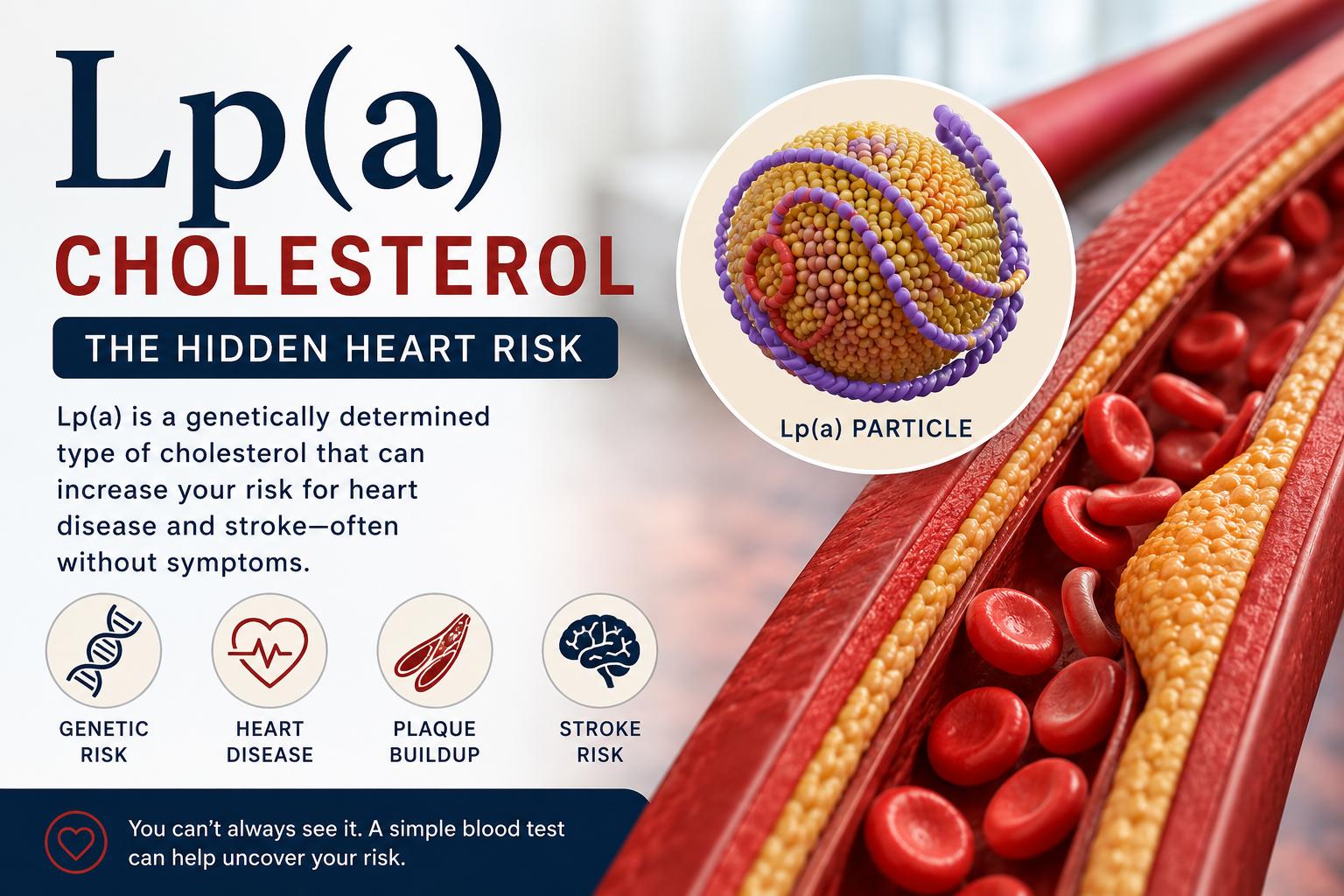
You eat healthy. You exercise. You try to do everything “right” — yet your cholesterol numbers still seem concerning. If this sounds familiar, there may be another factor involved: Lp(a), also called Lipoprotein(a).
Lp(a) is often referred to as “genetic cholesterol” because it is primarily inherited through your family genes. Unlike traditional cholesterol, you can have elevated Lp(a) even if you eat well and maintain a healthy lifestyle.
What Is Lp(a)?
Lp(a) is a type of cholesterol particle in the blood that can increase the risk of:
✔ Heart disease
✔ Stroke
✔ Artery plaque buildup
✔ Inflammation in blood vessels
Many people have no symptoms at all, which is why testing matters — especially if you have:
- A family history of heart disease
- Heart attacks or strokes at younger ages in relatives
- High cholesterol that doesn’t improve easily
- Personal heart concerns despite “normal” habits
A standard cholesterol panel does not always test for Lp(a). You may need to specifically ask your healthcare provider for an Lp(a) blood test.
Can You Lower Lp(a)?
Here is the important truth: there are currently no FDA-approved medications specifically designed to lower Lp(a). Since it is genetically influenced, it can be harder to reduce than traditional cholesterol.
However, the good news is that there are ways to support heart health and reduce overall cardiovascular risk naturally.
Diet Strategies for Supporting Heart Health
Focus on an anti-inflammatory, heart-supportive approach:
🥑 Healthy fats (avocado, olive oil, nuts)
🐟 Omega-3 rich foods (wild salmon, sardines)
🥬 Fiber-rich vegetables and leafy greens
🫘 Beans, seeds, and plant fibers to support cholesterol balance
🚫 Reduce processed foods, excess sugar, and inflammatory oils
A Mediterranean-style eating plan is often recommended for cardiovascular wellness.
Supplements That May Help Support Healthy Levels
While supplements are not a cure, research suggests some may support heart health and cholesterol balance:
Omega-3 Fish Oil – Supports inflammation balance and cardiovascular health
CoQ10 – Helps support circulation, energy production, and heart function
L-Carnitine – Some studies suggest it may modestly support lower Lp(a) levels
Amla - a heart-protective support strategy
Niacin (Vitamin B3) – Has shown the ability to lower Lp(a) in some studies, but should only be used under professional guidance due to side effects and medication interactions
The Bigger Picture
If you have elevated Lp(a), the goal is often to reduce inflammation, improve nutrition, support circulation, and optimize overall heart health rather than chase one number alone.
This is where a personalized nutrition and supplement plan can make a difference.
At Professional Nutrition Services / Holistic Health Center, we help clients understand what their labs may really be telling them and develop nutrition and supplement strategies that support energy, heart health, inflammation, and long-term wellness.
Not sure what your labs mean? Schedule a wellness consultation at feelgreatcenter.com or call 585-787-4251.